8
Few automotive moments bring a day to a halt faster than turning the ignition key and hearing nothing more than a rapid, hollow clicking sound. The immediate reaction for most drivers is to blame the battery. You call for a jump-start, drive to the nearest auto parts store, buy a replacement off the shelf, and install it with the hope that the headache is behind you.
Two days later, the car leaves you stranded in a parking lot all over again.
Misdiagnosing starting and electrical failures is one of the most common and expensive mistakes vehicle owners make. While a dead battery and a failing alternator produce overlapping symptoms, they serve entirely different functions within your car’s electrical ecosystem. Swapping a battery when the alternator is failing simply drains the fresh battery until it suffers permanent damage. Conversely, paying hundreds of dollars for a new alternator when a worn battery terminal was the true culprit is an exercise in frustration.
Learning how these two interconnected parts work together, recognizing the distinct sensory cues of their failure, and running a few simple tests will help you pinpoint the real problem before you spend a dime on repairs.
The Division of Labor in Your Car’s Electrical System
To tell which component has failed, you first need to understand how the starting and charging loop shares responsibilities.
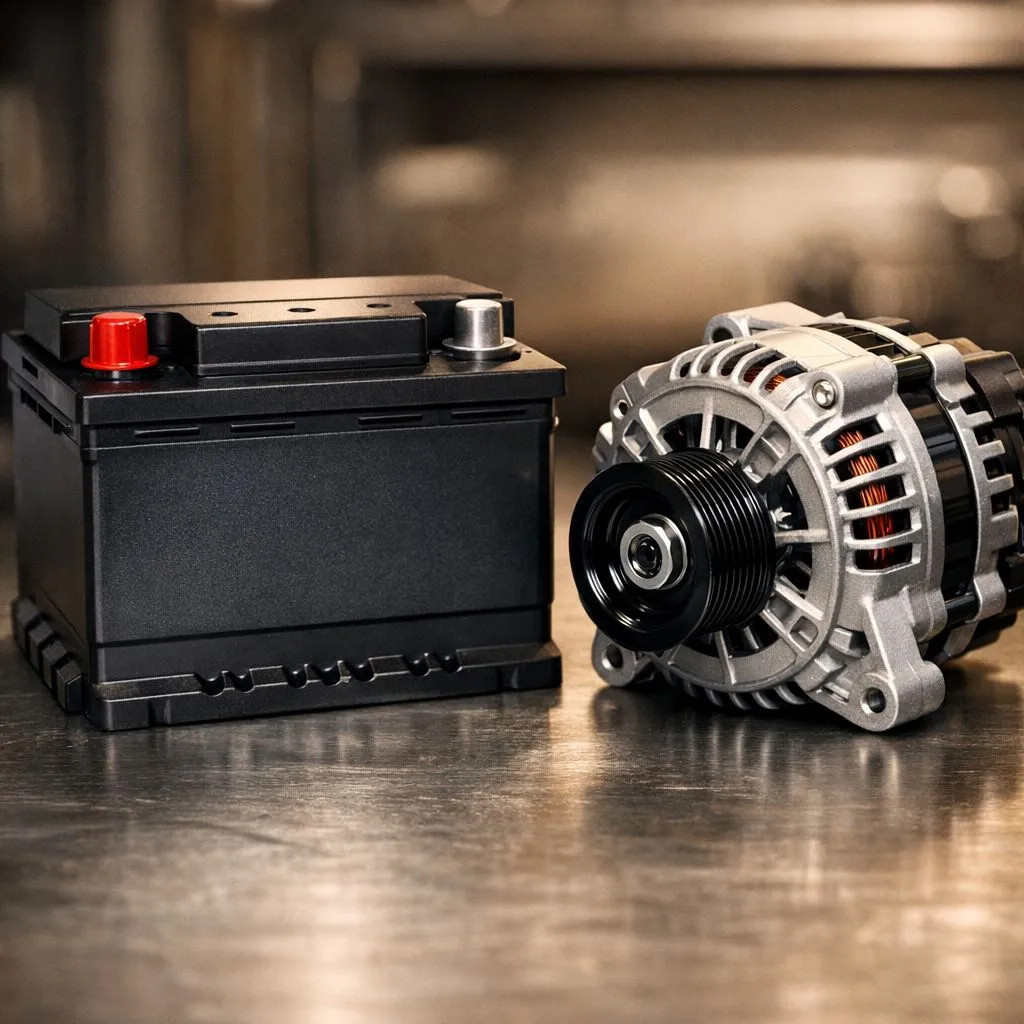
The car battery is an energy storage reservoir. Its primary job is to deliver a massive surge of chemical energy—measured in cold cranking amps—to the starter motor, which spins the engine’s flywheel and initiates internal combustion. When the engine is off, the battery also keeps small standby electronics alive, such as the security system, clock, and keyless entry receivers. Once the engine catches and begins idling, the battery’s active workload drops off significantly.
At that exact moment, the alternator takes command. Driven by a pulley connected to the engine’s serpentine belt, the alternator generates alternating current, passes it through an internal rectifier to convert it into direct current, and supplies electricity to every active electrical load in the vehicle. That includes the spark plugs, fuel pump, onboard computers, headlights, climate control blower, and infotainment system. While running all of these accessories, the alternator also directs a continuous trickle of electricity back into the battery to replenish the energy spent during starting.
Put simply: the battery gets the engine running, but the alternator keeps the entire vehicle alive. When one fails, the other cannot compensate for long.
Classic Symptoms: How the Vehicle Behaves
Although both components can leave you stranded, they tend to announce their decline under different driving conditions. Paying close attention to when the electrical distress occurs is the fastest way to narrow down the suspect.
Hallmarks of a Dead Battery
When a battery reaches the end of its useful lifespan or suffers an internal cell short, the issues concentrate almost exclusively around the initial cranking sequence.
A sluggish or dragging crank is the most recognizable warning sign. Instead of a crisp, immediate start, the engine turns over slowly, accompanied by a labored groaning sound before either catching or failing entirely.
If the battery is completely drained, turning the key often produces a rapid, rhythmic clicking from the starter solenoid, which is engaging and disengaging because the battery voltage collapses under the heavy starter draw.
Another clear indicator is how the car behaves after receiving a jump-start. If your vehicle starts up immediately with the help of jumper cables, runs smoothly for an extended drive without dashboard lights flickering, but then refuses to restart after you shut the engine off, the battery is almost certainly unable to hold a charge.
Telltale Signs of a Failing Alternator
Alternator issues typically manifest while the engine is running or immediately after the vehicle begins drawing heavy electrical power.
If your engine suddenly stalls while you are driving down the road or waiting at a traffic light, the alternator is the prime suspect. When an alternator stops generating voltage, the engine’s ignition coils and computer modules are forced to draw power directly from the battery’s reserve capacity. Once that reserve drops below roughly ten volts, the engine control module can no longer fire the fuel injectors or spark plugs, and the vehicle dies in motion.
Erratic electrical behavior while driving is another hallmark of alternator failure. You might notice headlights that appear unusually dim at idle but brighten noticeably as you press the accelerator and raise engine speed. This fluctuation occurs because a struggling alternator produces slightly more current at higher rotational speeds.
In modern, computer-dense vehicles, an alternator with dying diodes often triggers a cascade of strange dashboard warnings. The transmission may shift harshly, the radio may randomly restart, or warning indicators for anti-lock brakes and stability control may illuminate as the vehicle’s computers disable non-essential systems to conserve remaining electrical reserves.
Sensory Clues: Sounds, Smells, and Visual Warnings
Your senses can reveal critical diagnostic clues before you ever pick up a tool. Both the battery and the alternator produce distinctive physical symptoms when they begin to fail.
Listening for Mechanical Distress
A battery is purely chemical and solid-state; aside from the rapid clicking of the starter solenoid trying to engage, a battery produces no sound of its own.
An alternator, by contrast, contains high-speed mechanical bearings, an internal rotor, and copper stator windings. When the internal bearings wear down, they create a distinct high-pitched whining, buzzing, or grinding noise from under the hood that directly matches the rise and fall of engine RPM. If you hear a mechanical whine that intensifies as you rev the engine, the alternator’s internal bearings are likely dry, worn, or seizing.
A sharp, piercing squeal during engine startup or hard acceleration can also point to a glazed or loose serpentine belt. If the belt slips over the alternator pulley, the alternator cannot spin fast enough to produce its rated charging current.
Smells Under the Hood
Unusual odors can provide immediate insight into electrical problems:
A burning rubber smell frequently indicates that the alternator pulley is meeting excessive resistance or beginning to seize, causing the serpentine belt to drag across the stationary metal wheel and burn from extreme friction.
A sharp, chemical odor resembling hot electronics or burning insulation often points to overheated copper coils or fried rectifier diodes inside the alternator housing.
A sulfurous smell reminiscent of rotten eggs indicates that the battery is boiling its internal liquid electrolyte. This usually happens when an alternator’s internal voltage regulator fails, sending uncontrolled, excessive voltage straight into the battery casing.
Decoding the Battery Warning Light
Most vehicle instrument clusters feature a small red warning light shaped like a car battery. Despite its shape, this symbol is not a battery life indicator.
The light is actually a charging system warning monitor. It illuminates when the vehicle detects an imbalance in electrical potential, specifically when the alternator’s output voltage drops below the battery’s resting voltage. If that red battery light illuminates or flashes while you are driving along the highway, the vehicle is alerting you that the alternator has stopped keeping pace with the electrical demand.
Step-by-Step Diagnostic Testing
Guesswork often leads to buying parts you do not need. Conducting two structured diagnostic tests will confirm whether the battery or the alternator is responsible for the failure.
The Jump-Start Test and Modern Safety Rules
Jump-starting a car provides immediate diagnostic feedback, provided you follow proper safety procedures.
Connect the jumper cables to a running booster vehicle, allow the disabled car’s battery to soak up a surface charge for several minutes, and attempt to start the engine. If the car starts, disconnect the jumper cables carefully.
Observe the vehicle closely for the next two minutes:
If the engine stumbles, shakes, or stalls almost immediately after the booster cables are removed, the alternator is not generating enough electrical current to keep the fuel delivery and ignition circuits alive.
If the engine continues running normally with steady idle speed and bright headlights, the alternator is doing its job, and the battery is likely the component that failed to store enough cranking power.
A vital warning for modern vehicles: never attempt the old shade-tree trick of disconnecting the negative battery cable while the engine is running to see if it stays on. On older, non-computerized vehicles with simple carburetors, this was a common field test. On modern vehicles packed with microprocessors, disconnecting the battery removes the electrical system’s primary buffer. This can cause destructive voltage spikes that instantly destroy engine control units, infotainment systems, and body modules.
The Multimeter Test: The Definitive Check
The most accurate and cost-effective way to confirm the condition of both components is by using an inexpensive digital multimeter set to measure direct current voltage.
First, check the resting voltage of the battery with the engine completely off:
Place the black probe on the negative battery post and the red probe on the positive battery post. A healthy, fully charged automotive battery should show a resting voltage between 12.4 and 12.7 volts.
If your multimeter reads between 12.0 and 12.2 volts, the battery is substantially discharged. If the reading drops below 11.9 volts, the battery is completely drained or contains a shorted internal cell that cannot hold electrical potential.
Next, leave the probes in place and have an assistant start the engine:
Watch the display as the engine cranks. A healthy battery should not drop below 9.6 volts during the heavy load of cranking. If the voltage plunges below nine volts while the starter turns, the battery lacks the internal capacity to crank the engine reliably.
Finally, observe the reading with the engine idling:
Once the engine is running, the alternator should take over, and the multimeter display should jump quickly to a reading between 13.8 and 14.5 volts.
If the running voltage remains stuck at 12.2 volts or steadily ticks downward into the eleven-volt range with the engine running, the alternator is generating zero charging current.
Conversely, if the multimeter displays a reading higher than 15.1 volts, the alternator’s internal voltage regulator has failed, which can overcharge and permanently destroy the battery if left unaddressed.
The Hidden Third Culprit: Corrosion and Parasitic Draw
Before purchasing any replacement component, inspect the battery terminals and chassis grounds.
Heavy crusts of white, blue, or green corrosion around the battery posts act as an electrical insulator. A corroded terminal can prevent the starter from pulling the high amperage it needs, while simultaneously preventing the alternator from pushing charging voltage into the battery cells. Removing the terminal clamps, scrubbing the lead posts with a wire brush and a mixture of baking soda and water, and tightening the hardware securely solves many false battery failures without buying a new part.
If your battery passes voltage tests and your alternator outputs a steady 14.2 volts, but the car routinely goes dead after sitting parked for two or three days, you may have a parasitic draw. This occurs when an electrical circuit—such as an aftermarket dash camera, a stuck glovebox light switch, or a malfunctioning computer relay—fails to power down after the key is removed, silently draining the battery while you sleep.
Lifespan Realities and the Domino Effect
Automotive parts wear out on predictable timelines. Knowing where your components sit within their expected life cycles helps clarify diagnostic findings.
A standard automotive lead-acid or absorbent glass mat battery generally lasts between three and five years. Factors like extreme summer heat, severe winter freezes, and frequent short trips where the alternator never has enough driving time to fully recharge the plates will shorten this lifespan. If your battery is over four years old and struggles to crank, replacement is usually due regardless of the alternator’s health.
An alternator typically survives much longer, routinely lasting between seven and ten years or 100,000 to 150,000 miles. When an alternator fails prematurely, it is frequently the victim of a bad battery.
Driving for weeks with a weak, dying battery forces the alternator to work at maximum output constantly, generating excessive internal heat that cooks the rectifier diodes and brushes. Similarly, continuing to drive on a failing alternator forces the battery through deep discharges that permanently degrade its internal lead plates.
Taking twenty minutes to run a systematic multimeter check and inspecting your wiring connections ensures you fix the actual root cause of your starting trouble. By isolating the true failure point, you protect your new components, avoid repeated towing bills, and keep your vehicle starting reliably every time you turn the key.
