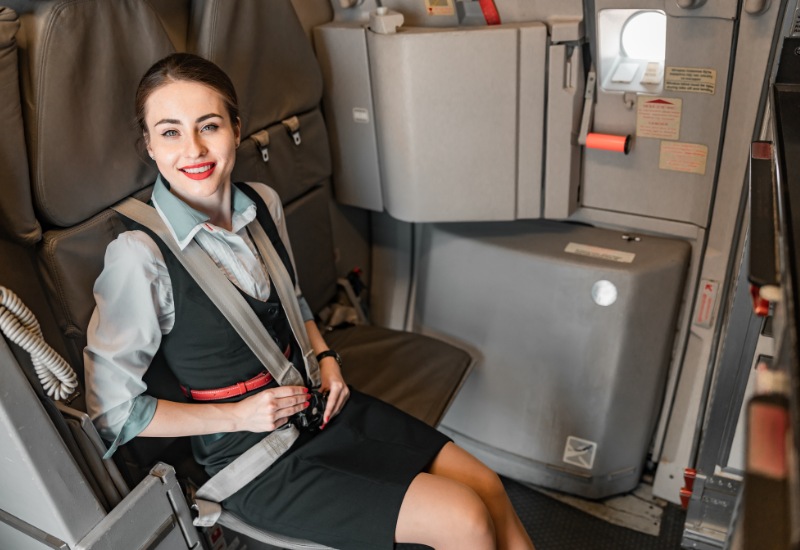
Maintaining aircraft jump seats guarantees flight crew safety and prevents costly flight delays caused by cabin equipment failures. Jump seats are safety-critical components subject to rigorous aviation regulations, continuous mechanical use, and extreme physical strain. Neglecting routine care leads to spring mechanism jams, harness fraying, and regulatory non-compliance that grounds aircraft during pre-flight inspections. Establishing a disciplined maintenance program preserves structural integrity, ensures instant mechanical deployment during emergencies, and extends the operational life of flight deck and cabin crew seating.
- Mechanical Inspection and Retraction Mechanism Care
Regularly inspecting auto-retraction mechanisms prevents seat stowage failures that violate aviation safety standards. A jump seat must automatically fold flush against the bulkhead or recess when unoccupied to maintain clear emergency exit corridors. Dust, dropped debris, and lack of proper lubrication bind the internal torsion springs and swivel hinges, causing the seat cushion to stick in the open position.
Maintenance technicians should clean and lubricate all pivot points, hinge assemblies, and retraction springs using aviation-approved dry lubricants. Applying wet grease attracts airborne dust, lint, and carpet fibers, forming an abrasive paste that degrades mechanical tolerances over time. Testing the retraction speed and spring tension during scheduled heavy maintenance checks ensures the seat snaps closed instantly without hesitation.
- Harness and Restraint System Maintenance
Inspecting safety harnesses for material degradation protects crew members from injury during severe turbulence or sudden decelerations. Jump seat restraint systems feature four-point or five-point harnesses equipped with inertia reels and rotary buckle assemblies. Continuous latching, unlatching, and tension friction cause webbing fraying, stitching unraveling, and buckle locking mechanism wear.
Technicians must extend the harness webbing fully to inspect for chemical contamination, tears, or heat damage. Inertia reels require functional testing to verify that they lock instantly under sudden acceleration forces. Cleaning the harness webbing requires mild, neutral detergent solutions that remove oils without weakening the synthetic webbing fibers or stripping flame-retardant chemical coatings.
- Cushion Integrity and Upholstery Upkeep
Preserving cushion foam density and fire-retardant upholstery maintains crew physical support while satisfying strict flammability compliance rules. Jump seat cushions endure constant compression, which breaks down the internal polyurethane foam matrix over thousands of flight hours. Sagging cushions cause crew fatigue during extended flights and diminish the shock-absorbing properties built into the seat design.
Inspecting leather or technical fabric covers for seam splits, cracks, and wear prevents moisture and contaminants from reaching the internal foam core. Any replacement of upholstery materials or foam inserts must comply with burn certification requirements, utilizing fire-blocking layers that meet aviation safety standards. Promptly repairing small surface tears prevents full cushion deterioration and avoids expensive complete seat overhauls.
- Long-Term Fleet Reliability and Operational Safety
A proactive maintenance program transforms jump seat upkeep from a reactive hassle into a predictable, manageable operational routine. Treating these specialized seats as vital safety equipment preserves flight crew readiness, protects cabin infrastructure, and prevents unexpected aircraft groundings. Disciplined mechanical lubrication, harness inspection, and foam integrity checks ensure every jump seat operates flawlessly when needed most.
Investing in quality replacement parts and certified technical care pays off through extended equipment longevity and reduced maintenance downtime across your fleet. Flight crews depend on properly functioning seating to perform their safety duties effectively during every flight phase. Prioritizing systematic jump seat care maintains strict airworthiness standards, protects your operational schedule, and delivers peace of mind for cabin operations.
